
About this film
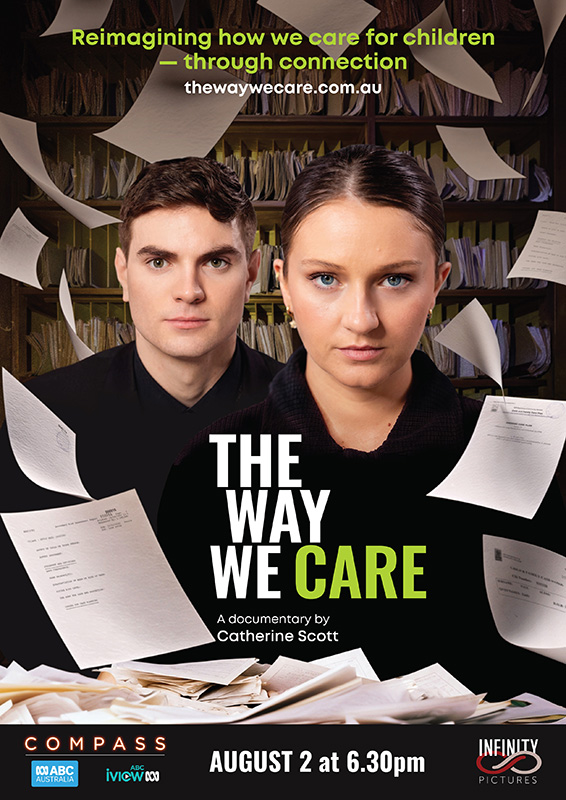
Emily and Lachlan know what it means to grow up searching for somewhere to belong. They grew up in Australia’s out-of-home care and lived its consequences first-hand. Now as advocates and young leaders, they are working to help transform a system that once failed them—so that the next generation of children does not have to endure the same harm they did, in the name of “protection.”
Relationships don’t just change lives. They change the system.

Their stories are deeply personal, shaped by separation, courage and the search for true connection. Together, they reveal not only the impact of childhood trauma, but what happens when the relationships children need most are repeatedly disrupted.
There are over 45,000 children across Australia are currently growing up separated from their families and communities through the out-of-home care system. Many experience multiple placements and the loss of the very relationships they need most. Compliance and risk assessments crowd out any real connection. Excessive rules and paperwork undermine enduring foundational relationships that last.
For decades, Royal Commissions and independent inquiries have documented what this system does to young people: fractured identities, repeated trauma, broken trust, and lives shaped by instability. Young people who have been silenced by the system are now speaking out.
Emily, Lachlan and many others with lived experience are sharing their insights and contributing to a new approach to out-of-home care. With human connection at its core, Relational care, is a model that recognises what decades of trauma research and lived experience already tell us—that children heal through relationships, not systems.
Emily and Lachlan have joined a growing movement of advocates and practitioners working in the field, as they push to re-design the system around the relationships every child needs to thrive. Their stories form the emotional backbone of the film, intercut with some examples of relational care models currently operating in Australia—showing not only what is broken, but what is possible when the system is built around connection, continuity, and care.
Relational care demands more than supervision and compliance. It calls for adults who are trained to understand trauma, culture, and loss, and who are supported to build deep, enduring relationships with the young people in their care. It prioritises stability, belonging, and emotional safety—so that children are not just managed, but known and loved.
This is not a story about blame. Rather, it is a story about possibility. It is an invitation to listen deeply to those who know the system from the inside, to learn from approaches already creating change, and to consider the role each of us can play in creating communities where children experience stability and care.
The Way We Care shows that it is possible to break the cycle: to replace disconnection with community, and survival with the possibility of a hopeful future.
The voices shaping the conversation
THE LIVED EXPERIENCE:
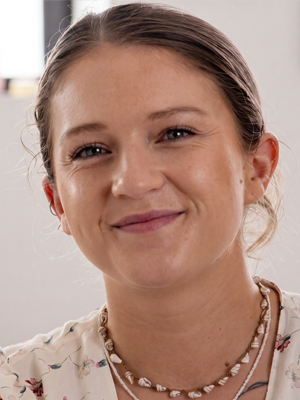
Emily Hikaiti was nine years old when she entered out-of-home care after experiencing family violence and. What followed was not the safety she had hoped for, but a childhood marked by repeated moves between foster homes and the painful separation from her siblings.
While she was fortunate to experience genuine love and care from many of the people around her, the system itself was often characterised by constant change, surveillance and decision-making that sat beyond her control. Surrounded by case plans, assessments and reviews, she rarely had the opportunity to form enduring attachments with carers or workers. Over time, isolation gave way to profound self-loathing and depression that resulted in Emily making a number of attempts at taking her own life.
At 15, Emily became pregnant. Within two years, after becoming a mother, she chose to leave care. Feeling ready to build a life on her own terms and no longer wanting to live under constant scrutiny, she stepped into adulthood despite the uncertainty that lay ahead.
Today, Emily is a respected advocate dedicated to improving the lives of children and young people in care. Drawing on both her lived and professional experience, she works to build systems that listen to, learn from and are accountable to the people they exist to serve.
“How do we make relationships for young people last?”

Lachlan Hobman was removed from his mum’s care at age nine due to childhood abuse and placed with his father, Jacob. A year later, as Lachlan’s distress emerged through violent behavior and episodes linked to post-traumatic psychosis, Jacob reached out for help. Instead, he found himself caught in a system that struggled to distinguish a parent seeking support from one posing a risk, and Lachlan was removed from his care.
What followed was a series of hotels and residential care homes with rotating shift workers. Despite repeatedly asking to return to his father, Lachlan remained in out-of-home care until he was 18.
Throughout his adolescence, Lachlan moved between residential group homes, surrounded by rotating shift workers and relationships that rarely had the opportunity to stabilise.
Today, Lachlan's story invites us to reflect on: what does home really mean, and how might systems better protect the relationships that children most want and need to hold onto?
“All I wanted to do was go home.”
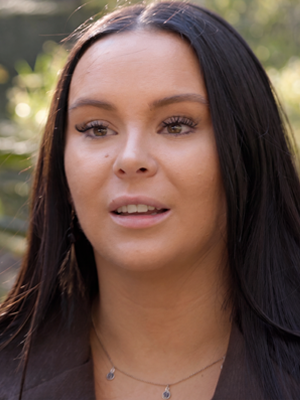
Angel Gould is a young Aboriginal practitioner working alongside children, families and carers across regional New South Wales as a Therapeutic Specialist with the Australian Childhood Foundation. Through her work with children living in foster and kinship care, she has seen how trauma is never experienced in isolation. It is intertwined with family, culture, identity and community.
For Angel, this understanding is deeply personal. Out-of-home care has touched her own family across generations. She knows that when children are separated from family, they can also lose connection to culture, belonging and a sense of who they are. That experience shapes every aspect of her practice.
Rather than replacing the adults already in a child's life, Angel works alongside them. She supports foster and kinship carers to understand the impact of trauma, loss and grief, helping them see behaviours not as problems to be managed, but as expressions of unmet need.
Her work is grounded in the belief that healing grows through relationships that strengthen children's connection to family, kin and community.
“…to lose family and therefore lose culture and a sense of belonging and connection…”
THE PRACTITIONERS AND CHANGEMAKERS:
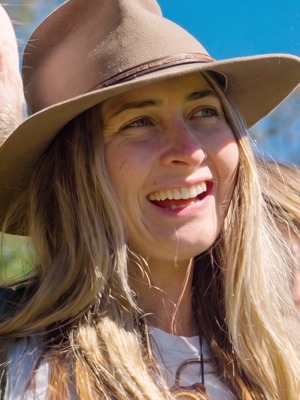
There are no desks, no forms and no pressure to explain what hurts. Instead, two young girls stand quietly beside a pair of horses. For Steph Douglas-Murphy, an equine therapist and trauma practitioner, this is where healing begins. Before trust can grow, young people need to feel safe. Before they can tell their stories, they need relationships that ask nothing of them except that they arrive exactly as they are – where they can feel seen, heard and accepted without judgement.
Working as a "Springer", Steph moves across different settings while remaining a consistent presence in the lives of the young people she supports. She doesn't replace the important adults around them. Instead, she works alongside families, carers and communities, helping children build the safety and trust that allow them to flourish over time.
The horses are part of that relationship. Without judgement or expectation, they respond honestly to fear, calm, tension and trust, helping children reconnect with their bodies, regulate overwhelming emotions and experience what it feels like to be safe in relationship.
Over time, Steph becomes much more than a therapist. She becomes a trusted adult. Someone who stays long enough to witness young people grow in confidence, discover healthy relationships and begin to imagine futures marked not by survival, but by possibility.
“I got you.”
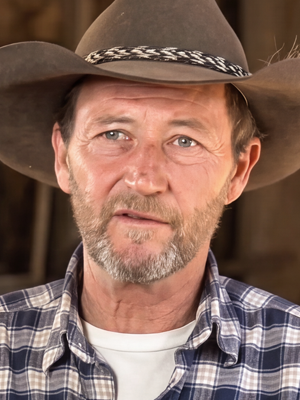
There are no padlocks and no surveillance cameras. Just house parents, shared meals and relationships built over time. This is the philosophy that underpins BackTrack, the nationally recognised organisation founded by Bernie Shakeshaft to support young people experiencing significant adversity. Rather than asking young people to fit into systems, Bernie has built a community that meets them where they are, surrounding them with trusted adults, meaningful work, practical skills and the opportunity to belong.
At BackTrack, young people are supported for as long as they need, with relationships that continue well beyond crisis and into education, employment and independent adulthood. The outcomes have been remarkable, demonstrating what becomes possible when young people experience genuine connection, responsibility and a community that refuses to give up on them.
For Bernie, lasting change begins not with programs, but with people who are prepared to stay.
“Whatever it takes, for as long as it takes.”
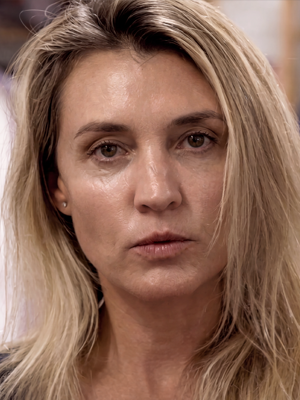
When children enter out-of-home care, parents often lose more than the day-to-day care of their children. They can also lose their voice.
As a parent advocate with Family Inclusion Strategies in the Hunter (FISH), Beck Rayfield walks alongside parents at one of the most difficult times in their lives. Drawing on her own lived experience, she provides peer support, court navigation and advocacy, helping parents find their way through a system that can feel overwhelming, isolating and impossible to navigate alone.
Beck invites us to look beyond the circumstances that bring families into contact with the child protection system and to consider what parents need if relationships with their children are to be preserved and strengthened wherever it is safe and possible. Her work is grounded in the belief that supporting parents is fundamental to supporting children.
“When children are removed, there’s no support for parents, and they get lost in this really confusing system.”
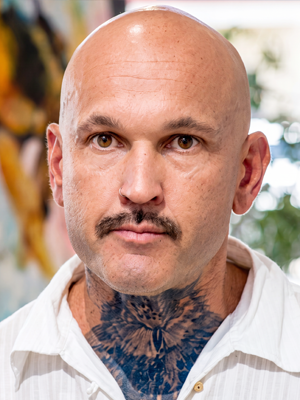
For many children in out-of-home care, life is shaped by uncertainty. Placements change. Adults come and go. Relationships are too often interrupted before trust has the chance to grow. As a Professional Individualised Care (PIC) foster carer, Kodi Brady offers something different.
Three years ago, Kodi welcomed into his family a young boy who had spent much of his early childhood in residential care, raised by rotating staff. When he first arrived, his trauma was expressed through overwhelming emotions and constant dysregulation. Kodi didn't see bad behaviour. He saw a child doing everything he could to survive.
Supported by trauma-informed training, therapeutic guidance and a wraparound community, Kodi's family offered time, consistency and the confidence that they weren't preparing for another goodbye. Today, that little boy is thriving, surrounded not only by his family, but by a community that has embraced him as one of its own.
Kodi's story reminds us that when children experience relationships over time, they begin to believe they belong.
“…it’s not just till these young people are 18, it’s lifelong relationships.”
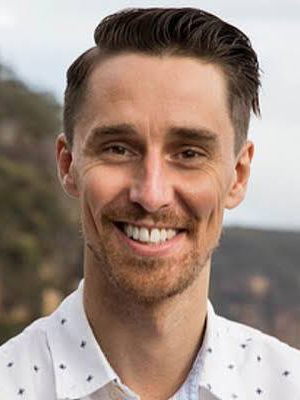
After years working alongside children, families, practitioners and communities, Jarrod Wheatley has come to believe that lasting change begins with a different question. Rather than asking what systems need from children and families, he asks what children and families need from systems.
As co-founder of the Centre for Relational Care, Jarrod's work brings together lived experience, contemporary research and practice to explore how communities and systems can better support the enduring relationships that help children flourish. At the heart of this thinking is a belief that children are best protected through strong relationships, capable families and caring communities.
“Paperwork doesn’t change people’s lives. People do.”
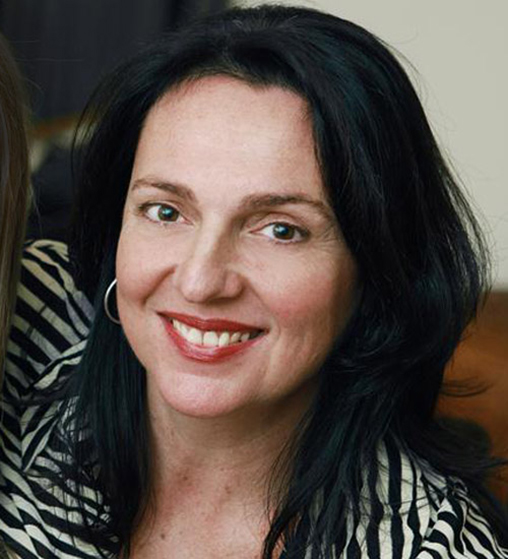
Director’s Statement
When I first began this film, I thought I was making a documentary about Australia’s out-of-home care system. What I discovered was something much more universal.
As I spent time with the young people at the heart of this story, and with the carers, practitioners and advocates, I found myself returning to the same simple truth. The moments that changed lives were rarely dramatic. They were built over time through trust, consistency, and enduring relationships. Repeatedly, I heard people describe the profound difference that one person could make simply by remaining present.
This documentary doesn’t shy away from the realities of childhood trauma or the challenges facing Australia’s child protection system. Those realities matter. But I came to realise that the story I wanted to tell wasn’t only about what happens when children experience harm. It was also about what becomes possible when they experience connection, ongoing relationships, and a genuine sense of belonging.
Along the way I met remarkable people whose lives and work embody that possibility. Young people whose courage and insight challenge many of our assumptions. Carers and practitioners who have chosen to work differently. Community leaders who remind us that raising children has always been a shared responsibility.
Making The Way We Care has reinforced my belief that lasting change rarely begins with certainty. It begins with listening. By making space for lived experience, remaining curious, asking better questions of ourselves and the systems we create.
I hope this documentary offers more than a window into the experiences of children and young people in out-of-home care. I hope it invites audiences into a broader conversation about what children need to flourish, what communities need to thrive, and how we might create more opportunities for every child to experience connection, build long-term relationships and know, without question, that they belong.